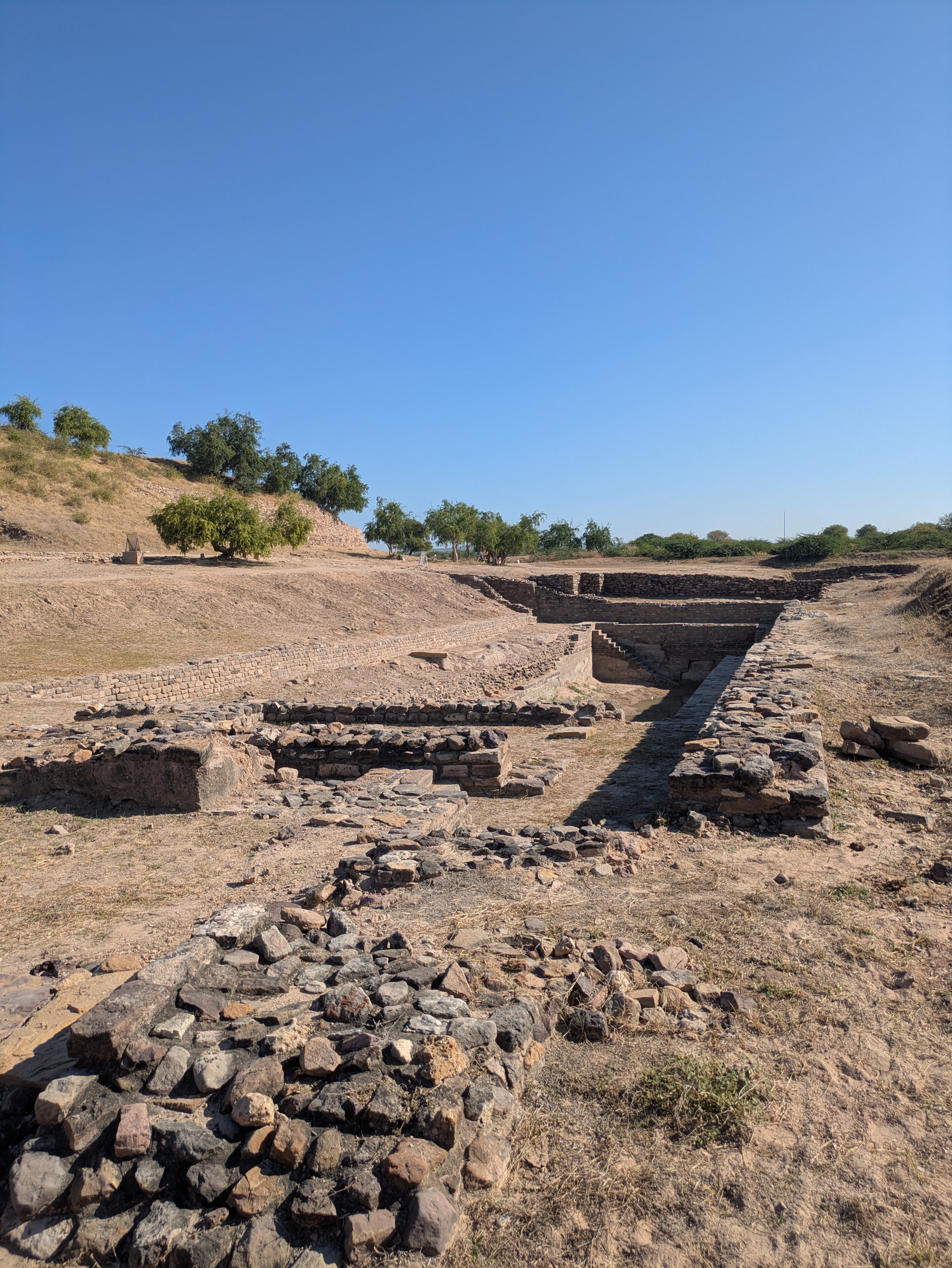
On a recent trip to the Indian state of Gujarat I visited Dholavira, a bronze age city from the Harrapa civilization. We visited following a stay at the Rann of Kutch, a desert popular with tourists for the otherwordly and endless views of flat white salted lake bed. The city sits on an island in the middle of the Rann of Kutch Lake (which is a few hours from the popular salt flats), with Pakistan on the northern edge of the lake. We drove to Dholavida by driving over a land bridge that spans the lake, which is shallow and runs to the horizon; looking out from the car window the lake seemed to blend into the sky and gave the illusion that we were flying. Along the bridge we saw groups of pink flamingos, some flying but most hanging out with their heads underwater looking for something to eat (I assume).
The Dholavira site is not very widely known or visited, so I was surprised at the quality and scale of the ruins (as well as the depth of information presented at the site's museum). Dholavira was built around 2,500 BC. Because the city was in such a barren and dry landscape, many of the structures at the ruins were built for water collection and storage. Water storage was necessary to sustain the city's 10,000 inhabitants during a long dry season. The structures include a pretty magnificent and ingenious damming and reservoir system, with precisely engineered walls, steps and ramps. The series of reservoirs were designed to filter water and archaeologists think they each served specific purposes. The center of the city site also is a large citadel that looms over the island. Some edges of the citadel are not yet excavated and you can see sections as modern people must have found the site originally - a pretty unassuming hill. In front of the citadel is a long stadium with seats running along it, and it was fun to imagine what it might have looked like filled with cheering crowds. As far as I know we don’t know what games they played.
We had an excellent guide (he spoke in Hindi and I got the translated version). He told us that years ago, after working for years on the archaeological dig, he had been promised a full time job at the site but since then the government has diverted resources elsewhere and now research at the site is on hold. He told us that the site would benefit from more international interest, and he hopes that more people - including visitors to the Rann of Kutch - start to make the extra couple hours journey to this site.